

As a Senior Consultant in International Comparative Education and Global Mobility, I have observed a significant shift in student migration patterns toward Scandinavia. Sweden, in particular, has emerged as a premier destination for high-caliber international scholars. This is not merely due to the aesthetic appeal of the region, but rather a reflection of a robust social welfare state that integrates environmental stewardship, linguistic accessibility, and a unique modular educational structure. For the global student, Sweden offers a laboratory for sustainability and innovation that is underpinned by a high standard of living and a non-hierarchical academic culture.
Key Takeaways: The Swedish Academic Advantage
- Modular Learning Efficiency: Sweden’s "One Course at a Time" model minimizes cognitive switching costs, allowing for deeper subject matter immersion and improved long-term retention.
- Linguistic Fluidity: With an English Proficiency Index (EPI) consistently among the highest globally for non-native speakers, the linguistic barrier for international students is virtually non-existent.
- Sustainable Infrastructure: The nation’s integrated public transit network significantly reduces the carbon footprint ($CO_2$ per capita) of the student population while maintaining high mobility.
- Cost-of-Living Equilibrium: Contrary to pervasive myths of Nordic hyper-inflation, strategic budgeting reveals a cost-of-living parity with many mid-tier Western urban centers.
- Environmental Bio-Affinity: Access to pristine boreal ecosystems is not just for leisure; it is a vital component of the Swedish "Allemansrätten" (Right of Public Access) which promotes mental well-being and focus.
Ecological Immersion and Mental Well-being
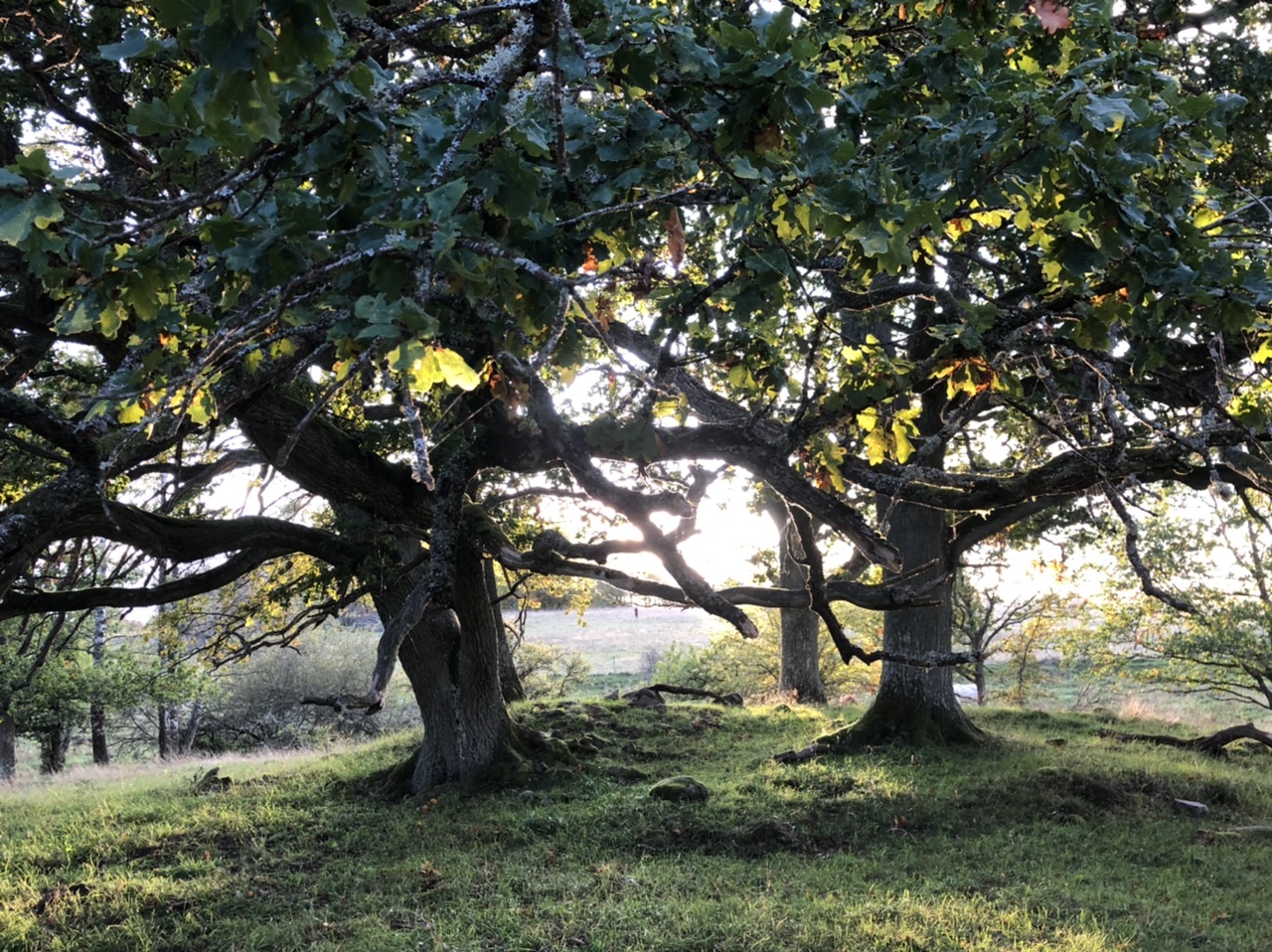
Sweden’s landscape is dominated by boreal forests and glacial lakes, covering approximately $63\%$ of its landmass. From a psychological perspective, this proximity to nature facilitates a phenomenon known as "Restorative Environment Theory," where the natural landscape reduces cortisol levels and enhances cognitive function. For an international student, the ability to transition from a high-tech university campus to a pristine forest in minutes provides a unique balance that mitigates the stressors of academic life.
Linguistic Accessibility in a Multilingual Society
One of the primary friction points in global mobility is the language barrier. Sweden effectively eliminates this through a long-standing educational policy that integrates English into the core curriculum from a young age. Approximately $80-90\%$ of Swedes are proficient in English. This high level of bilingualism ensures that navigating daily logistics—from municipal services to social integration—is seamless for English speakers, allowing students to focus their mental energy on their specialized studies rather than linguistic survival.

Econometric Realities of the Swedish Lifestyle
There is a common misconception regarding the "Nordic Cost Premium." However, an econometric analysis of daily expenses reveals a manageable reality. For instance, a weekly grocery expenditure for a student typically ranges from $300\text{ SEK}$ to $400\text{ SEK}$.
Using the exchange rate approximation $E$, where $1\text{ USD} \approx 10\text{ SEK}$, the daily food cost $C_{daily}$ can be calculated as:
$$C_{daily} = \frac{400\text{ SEK}}{7\text{ days}} \times E \approx 5.70\text{ USD}$$
This suggests that a disciplined budget of $15\text{ USD}$ per day is more than sufficient for high-quality subsistence, often leaving a surplus for regional travel and cultural exploration.
Infrastructural Accessibility and Public Transit
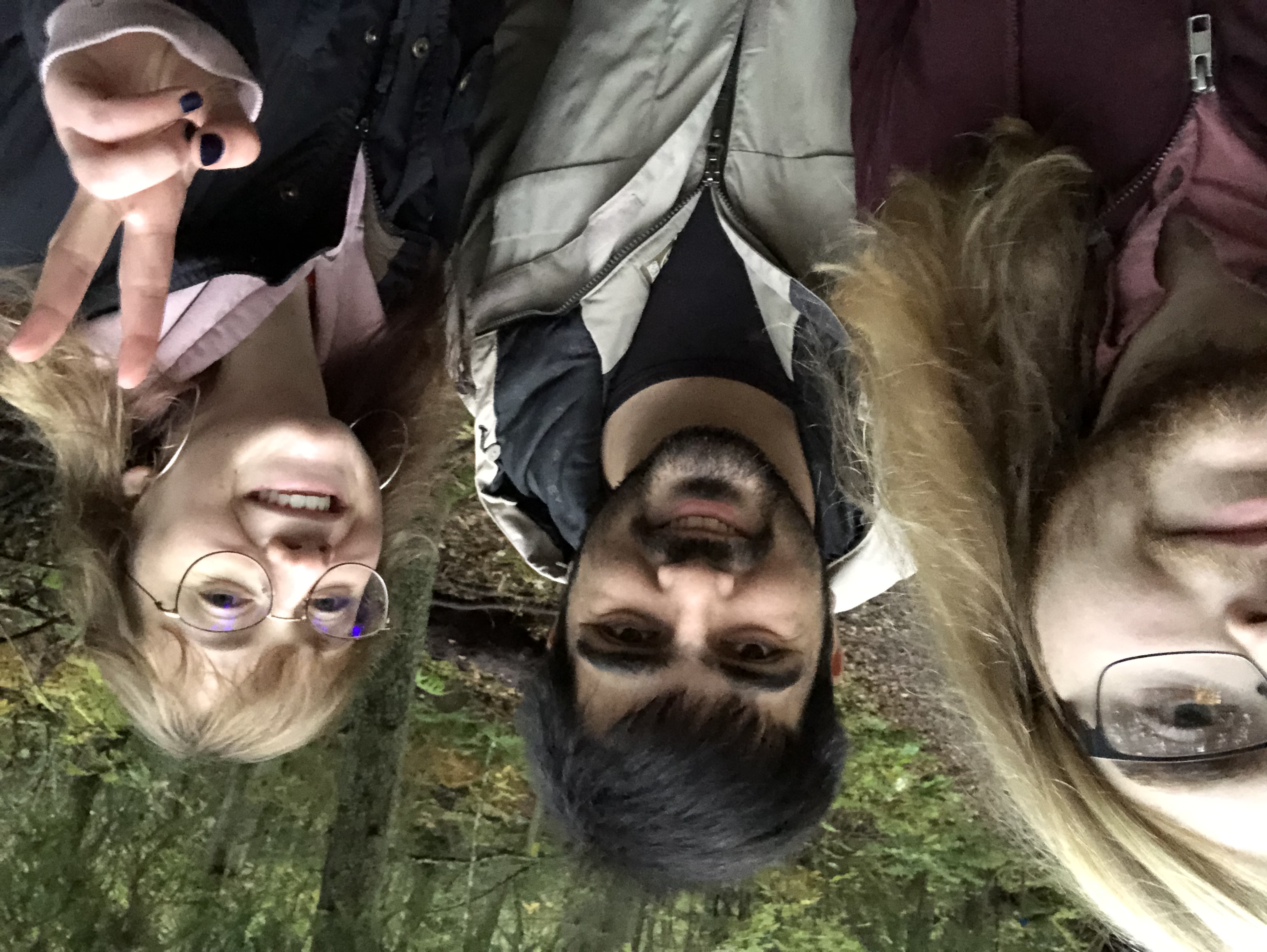
Sweden’s commitment to sustainable urbanism is reflected in its pervasive public transport network. The system is designed for maximum accessibility, utilizing a unified payment architecture. For a nominal fee of approximately $27\text{ SEK}$ ($\approx 2.70\text{ USD}$), students gain $75\text{ minutes}$ of unlimited transit within a city. Inter-city connectivity via the Swedish rail network (SJ) is equally efficient; for example, the $447\text{ km}$ journey from Stockholm to Växjö can be completed in approximately $4\text{ hours}$ for a cost of $40\text{ USD}$, representing a highly competitive price-to-distance ratio.
The "Sequential Course" Model: A Pedagogical Shift
The Swedish academic calendar often utilizes a "Sequential Course" structure, which differs fundamentally from the U.S. or U.K. "Parallel Model." Instead of managing 4-5 subjects simultaneously over a 15-week semester, students often focus on a single module intensely for $5\text{ weeks}$.
This structure promotes Deep Work. For example, a student may attend seminars only 3 days a week, but the expectation is that self-directed study hours $S$ should be at least double the lecture hours $L$:
$$S \ge 2 \times L$$
This autonomy provides students with extended blocks of time (often 4-day "weekends") to engage in cultural immersion, travel, and research, fostering a high level of independent thought and global perspective.
Interactive FAQ: Studying in Sweden
Is it difficult to find English-taught programs in Sweden?
On the contrary, Sweden offers over 1,000 Master’s programs taught entirely in English. While Bachelor's programs are more commonly in Swedish, the number of English-led undergraduate options is increasing annually in fields like ICT and Sustainability.
How cold does it actually get in Sweden during the winter?
Temperature varies significantly by latitude. In the south (Stockholm/Malmö), winters are relatively mild with averages around $0^\circ\text{C}$ to $-5^\circ\text{C}$. In the north (Lapland), temperatures can drop below $-20^\circ\text{C}$. Proper insulation and high-quality Nordic gear are essential for climate adaptation.
Do I need a car to explore the Swedish countryside?
Generally, no. The combination of trains, regional buses, and extensive cycling paths makes most of Sweden accessible without a private vehicle. For very remote hiking trails, local shuttle services often operate during peak seasons.
Post a Comment for "The Nordic Pedagogical Model: Analyzing the Strategic Advantages of Higher Education in Sweden"